







“For all those who are seriously and sincerely interested in any branch of the ceramic arts, a fine place to work.”
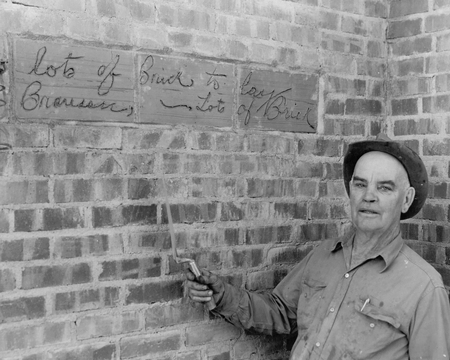
That vision, articulated by founder Archie Bray in 1951, has guided the Archie Bray Foundation for the Ceramic Arts for the last 75 years, ever since Bray set out to bring arts and culture to his community of Helena, Montana. Operating on the site of an industrial brickyard, complete with clay and kilns, ceramics was a natural fit. What began as a humble idea to invite talented artists to live and work on site, give them support, and showcase their work has grown into one of the most respected artist residency programs in the country.
Ask Resident Artist Director Steven Lee what has made Bray endure, and he’ll point to the focus and intention of the organization.
“There are not a lot of organizations, particularly in ceramics, where the artists are at the forefront. They’re the driving force of everything else that happens,” Lee says. The Bray has built education programs, galleries, exhibitions, and a ceramics supply business that serves teachers and artists across Montana. Every one of those programs flows from the same engine: the artists themselves.
Building the Bray for the Long Term: Studios, Kilns, and Sustainability #
Throughout its history, the Bray has steadily transformed its campus and its capacity, while keeping its mission focused on artists. The Murdock Trust has been honored to play a small part in the last 25 years of this evolution through five grants.
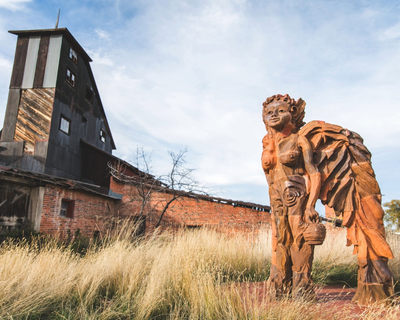
The Trust’s partnership started with the Bray’s first-ever capital campaign in the early 2000s, which built brand-new studios for resident artists. This campaign was a chance to start asking longer-term questions about where the Bray was headed. When Lee became director in 2006, himself a former Bray resident, that momentum continued. The Bray built out its kiln facilities, giving artists some of the best equipment in the country and elevating the organization’s visibility in the field. With each new project, the organization grew more confident and strategic.
That growth paid dividends. The Bray went on to complete the largest comprehensive campaign in its history: nearly $8 million for facilities and program improvements. Most recently, it repositioned its programs and infrastructure for a post-COVID environment, building earned-income revenue streams to diversify and sustain its operations for the long haul.
“We used to be a day ahead, then a month ahead, then a year ahead,” Lee says. “Now we’re at a place where we can be thinking 10, 20 years out in terms of organizational strategy.”
Staying True to a Ceramics Arts Mission #
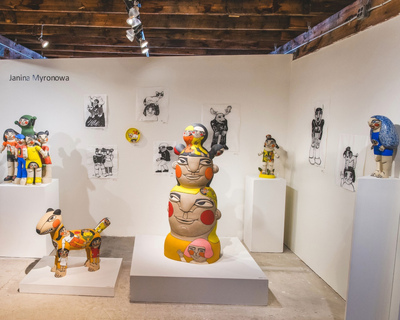
For Lee, the Bray’s story is a lesson in resisting the temptation of scope creep and equating growth with progress. “Rather than growth, I like to think of it as evolution,” he says. “We’re adjusting to the needs of current and future generations of artists.” That means staying disciplined about the mission and trusting that when that engine is healthy, everything else follows: a robust and respected residency program, a permanent collection of more than 400 works donated by former residents, a thriving community education program, and a supply business that serves artists across the region.
It’s a focus Lee understands personally. He first came to the Bray as a resident fresh out of his undergraduate studies. “I remember thinking, I’ve not seen a lot of organizations like this that are so directed toward supporting artists,” he says. The Bray has hired an artist as its director from day one, a choice Lee believes keeps the organization locked into the real needs of the people it serves.
A Ripple Effect Across Montana’s Arts Community #
Today, the Bray connects Helena to a global community of artists, brings international cultural perspectives to Montana, and gives thousands of community members the chance to get their hands in clay. This is an experience Steven calls “really liberating” in an increasingly virtual world, and which brings joy and purpose to first-time ceramicists and professional artists alike.
As the Bray celebrates 75 years, it stands as a testament to what is possible when an organization knows exactly who it serves, and stays true to that calling for generations.