





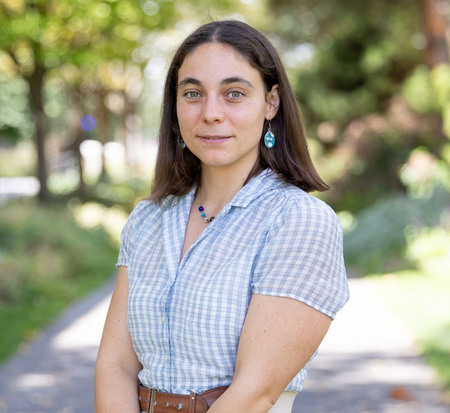
Jessica Sutter, Ph.D., keeps an image of a galaxy on her desktop. It’s one she made herself, layering data onto a three-color composite of light no human eye could otherwise see. During a recent conversation about her work, she mentioned it almost in passing, then admitted she couldn’t stop looking at it while she talked. “I have one pulled up next to me,” she said, “so I keep looking at it.”
It's a fitting habit for someone who has spent two decades chasing the same feeling she had as a kid at summer camp, when a telescope pointed at a pair of orbiting stars showed her something she hadn't expected: color, out there in the dark. "Most things in space just kind of look like gray blobs," she said. "But these, you could really see that one star is yellow and one is blue. And I thought it was so beautiful."
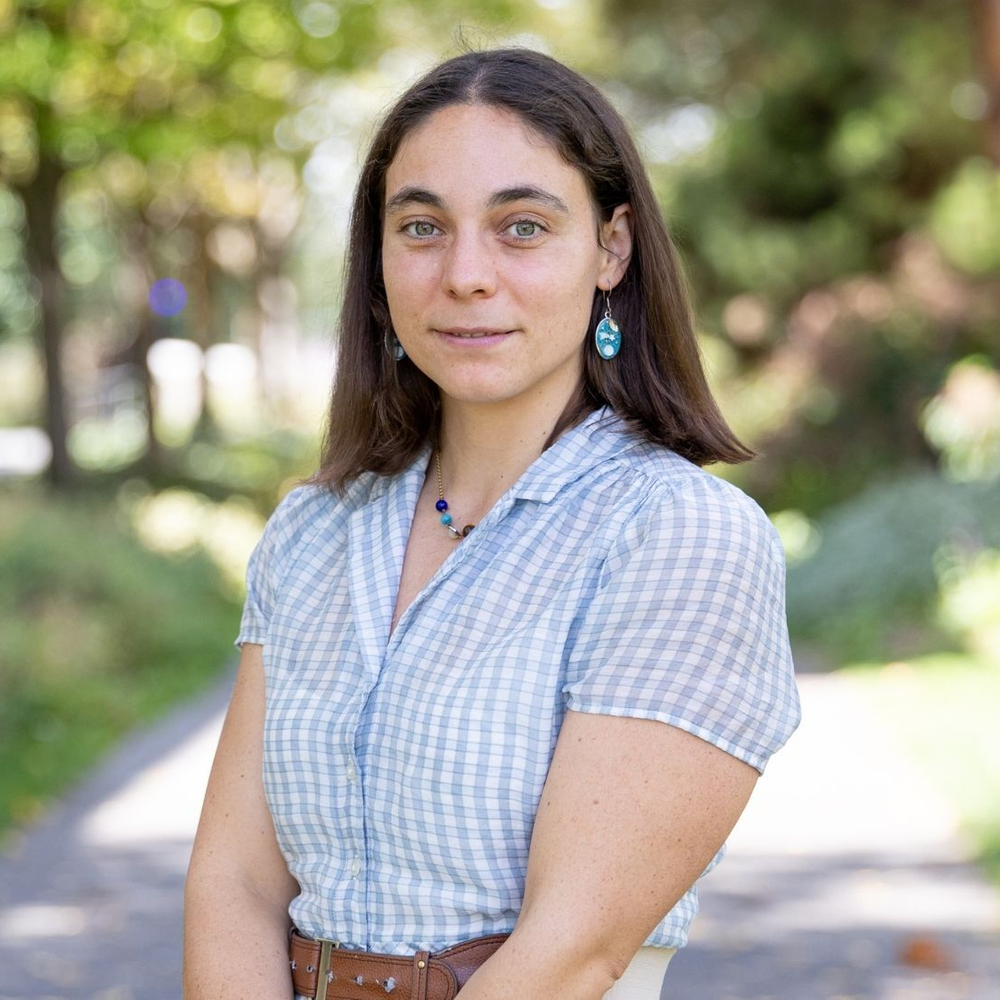
That early spark, formed on the observation deck of a summer astronomy camp run by Portland's Oregon Museum of Science and Industry, carried Sutter through high school, an undergraduate degree at Whitman College, a PhD, two postdoctoral fellowships, and back to the same small astronomy department where she once sat as a student. Now an assistant professor of astronomy at Whitman, Sutter is the 2026 recipient of the Murdock Trust’s Lynwood W. Swanson Promise for Scientific Achievement Award, recognizing early-career researchers whose work and mentorship point toward outsized impact.
From Distant Galaxies to the Dust In Between: Sutter’s Current Research #
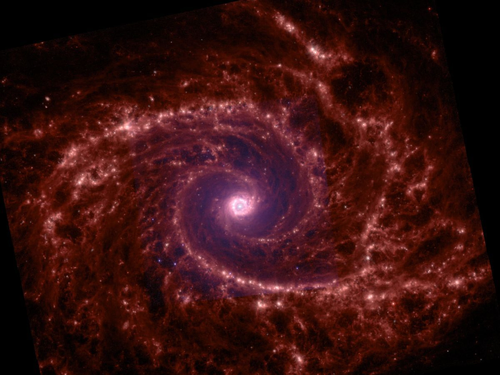
Sutter's research has shifted focus over the years, from stars, to distant galaxies, to the nearby ones she studies now. Her specialty is the interstellar medium: the gas and dust that drifts between stars and shapes what a galaxy becomes. "Space dust is not really like household dust," she explained. "It's mostly made up of small carbonaceous grains, as well as some silicates." Understanding the size, charge, and behavior of those grains, she said, offers clues to a much bigger question: whether a galaxy will keep forming stars, or slide toward what astronomers call quiescence, a "red and dead" galaxy that has stopped growing.
“What we’re doing in the local universe sets the groundwork for the study of distant objects where you can’t see the structures or get as much information,” Sutter explains. By better understanding what’s happening nearby, it’s possible to more accurately understand what’s happening in very distant galaxies. The field is also beginning to integrate observational data with simulations and theory to better understand how galaxies change over time. “We’re starting to put together this more holistic picture of how the dust grains influence the galaxy’s evolution.”
In all her language, Sutter uses “we” rather than “I,” pointing to the collaborative nature of her field. Elisabeth Mermann-Jozwiak, Ph.D., provost and dean of the faculty at Whitman, points to Sutter’s engagement with multiple research collaboratives as a real strength of her research and teaching. Not only does Sutter stay deeply engaged in her field, but she also finds opportunities to bring undergraduates into the weekly or bi-weekly Zoom meetings where that work happens. These collaboratives have led to multiple grant proposals and publications, including three papers in which she was a primary or first-tier author. Such a high level of productivity is particularly impressive for someone at a teaching-focused primarily undergraduate institution, Mermann-Jozwiak said. But for Sutter, the balance of teaching and research are the primary reason she returned to her alma mater.
Astronomy Teaching and Undergraduate Research Mentorship #
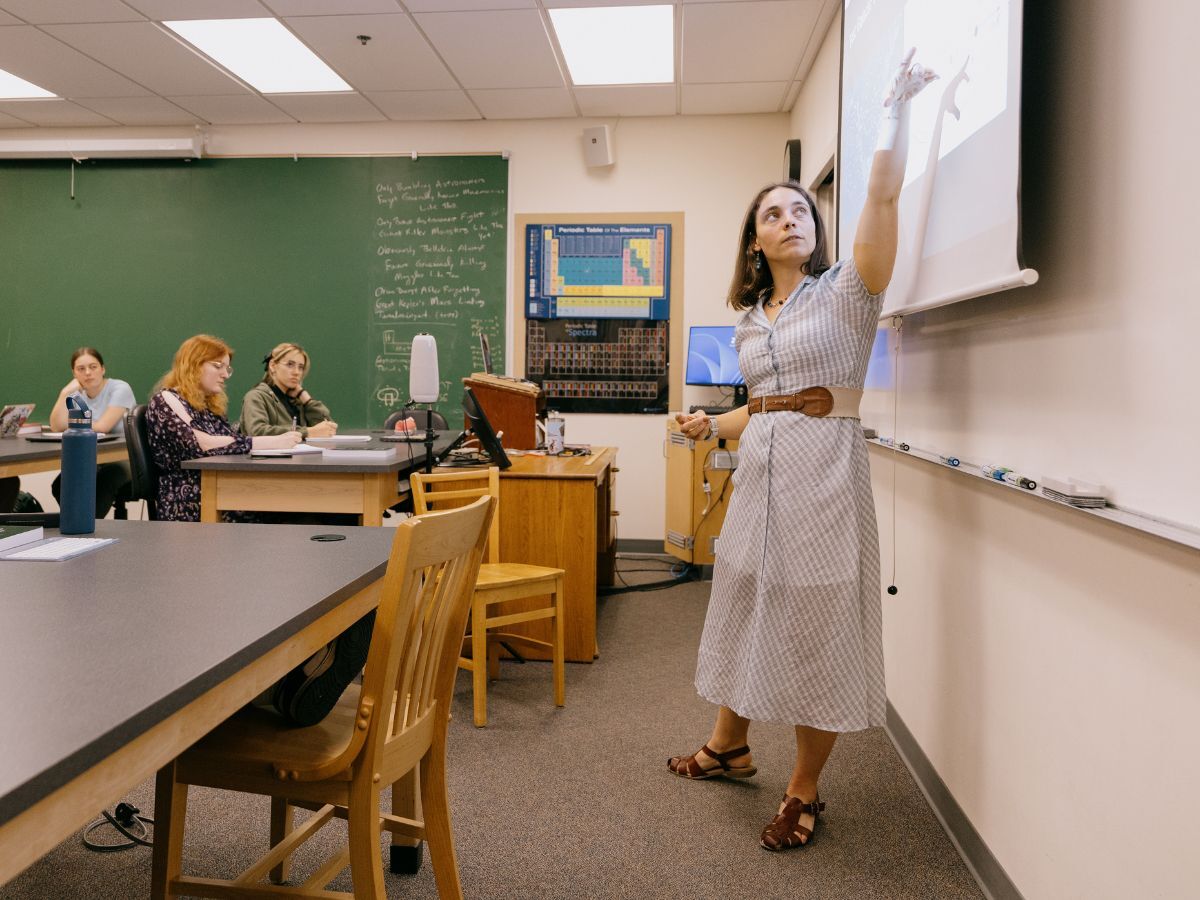
Sutter loves teaching students who don’t think of themselves as science people. In Astro 110, a survey course for non-majors, she built a grading system around "badges" that students earn through a mix of traditional problem sets and less conventional assignments, like writing a poem about the solar cycle. She also has her students replicate part of an experiment that once earned a Nobel Prize, measuring the mass of the supermassive black hole at the center of the galaxy using real data and orbital mechanics. "It's not terrible math. They all can do it," she said. "And then I get to write on all of their labs that they just earned a Nobel Prize."
For the students who catch her enthusiasm and join her research team, she then works to build the elements of a grad-school experience into her research mentorship, intentionally mixing lectures, journal club, team bonding, and conference presentations. Hanna Schmit, a current research student, said that Sutter’s mentorship helped shape what she wanted to do next. “Academically, she pushed me forward to basically kickstart my career and increase the opportunities I have after undergrad,” Hanna says. She remembers sitting in Sutter’s office as they registered her for her first academic conference. “When we submitted my first abstract, I was like, I would not be here without her support.”
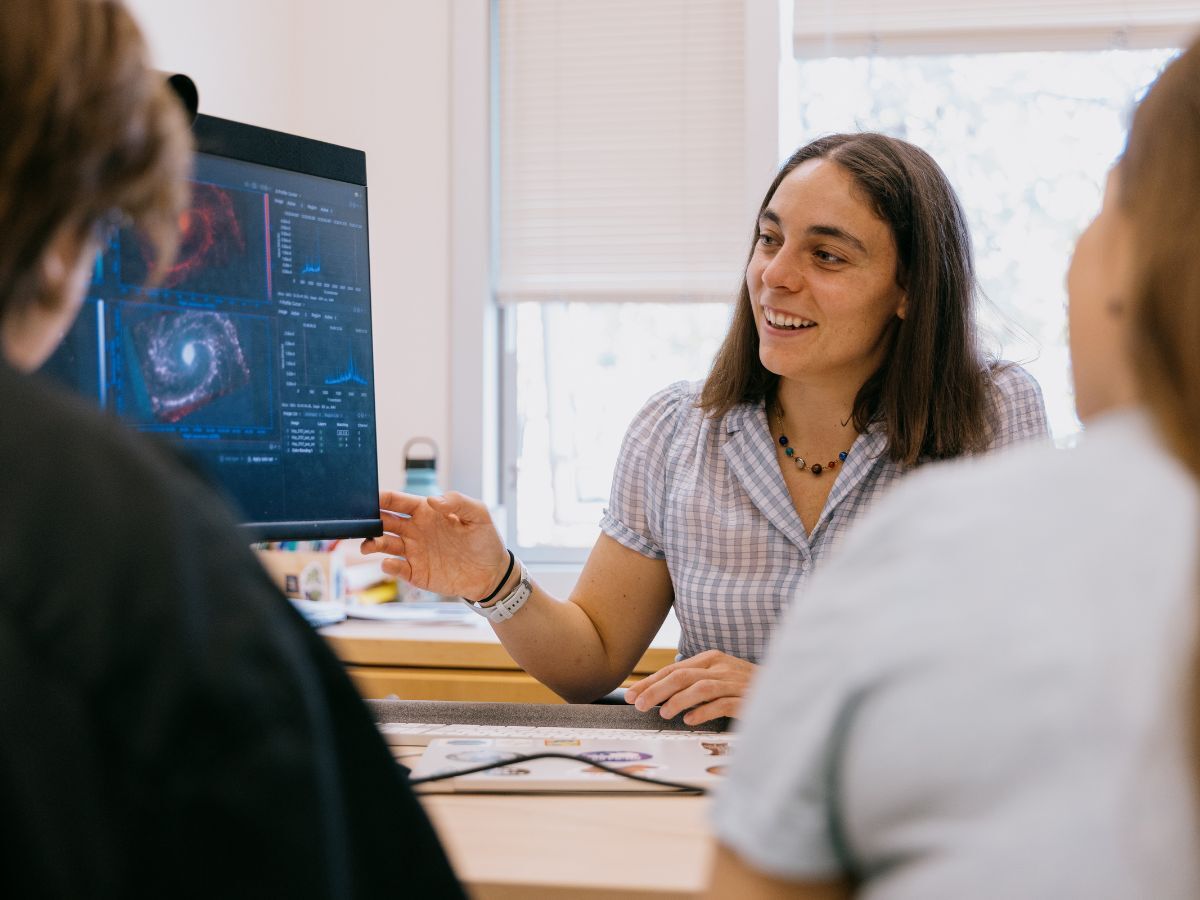
Cassidy Novack, a recent graduate, said that Sutter encouraged her to pursue an honors thesis despite it being rare for astronomy students. “I was not really confident in doing it myself,” Cassidy remembers, “but she encouraged me and two other seniors to put in the application and give it a shot. We all ended up being able to do it. I wouldn’t have done it without her.”
Both Cassidy and Hanna are pursuing Sutter’s own field, extragalactic astronomy, carrying the confidence and skills she gave them into the next stage of their research careers. “Dr. Sutter has one hundred percent shaped what I want to become,” Hanna said. “Seeing her teach is very inspirational because I feel inspired to also teach and mentor students’ research in my future career while also pursuing academia.”
That kind of mentorship is why Sutter prioritized teaching as she built her career. "I had really powerful female mentors when I was an undergrad," she said. "The hope was that that was something I could give back in the future too." Two and a half years into her time at Whitman, Sutter has already worked with 18 research students, a number Mermann-Jozwiak called striking for someone so early in her career. "She's one of the most sought-after mentors," the provost said.
Science Outreach Beyond the Classroom for Local Schools and Families #
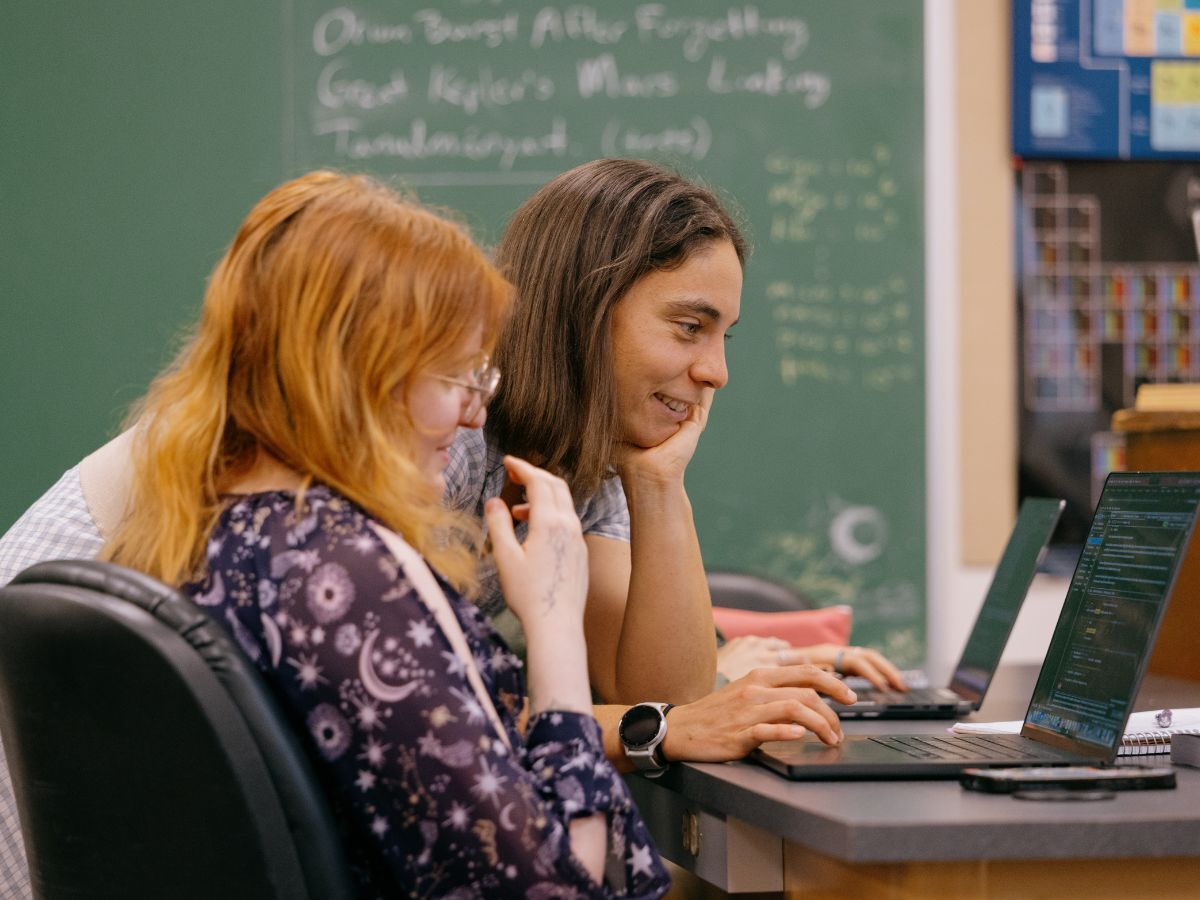
Sutter's impact reaches past the astronomy department and the research lab. Mermann-Jozwiak points to that community engagement as central to what Whitman hopes to be as a college invested in the surrounding region. Sutter gives planetarium shows for visiting schoolchildren and serves as co-faculty advisor for Whitman's Science Outreach program, which hosted several family science nights at local elementary schools this year. She also developed astronomy activities for Whitman's summer STEAM program, run in partnership with the Confederated Tribes of the Umatilla Indian Reservation.
"One of the things that's important for Whitman's strategic plan is to be engaged in the local and regional community," Mermann-Jozwiak said. "The other thing she does, and does really well, is live up to that commitment... she participates in science nights and gets elementary students excited about astronomy." In a region with few science education resources, Mermann-Jozwiak said, that outreach reflects "where we are and where we would like to go as a college and a community."
What the Swanson Award Means to Sutter #
For an assistant professor still several years from tenure, Sutter said the Swanson Award carries a practical weight alongside the honor. Her startup research funding runs out at the end of this year, which would normally mean a smaller research group next summer. "Having this award will allow me to take an additional student who I might not have been able to take without it," she said.
Mermann-Jozwiak sees Sutter's work as a demonstration of what a teaching-focused college can be when research and mentorship move together instead of competing for the same hours. "There's a real shift from emphasizing teaching only to integrating research and scholarship into the teaching," she said. "Jessica is just a model example of how to do both."
“The Swanson Promise award exists for researchers like Jessica, who are still early in their careers but are already showing us where they’re headed,” said Aaron Putzke, Ph.D., vice president of scientific research at the Murdock Trust. “She’s built a remarkable research program in just her second year on faculty, and she’s doing it while bringing undergraduates fully into that work. That’s the kind of promise this award is designed to recognize and invest in.”
The Murdock Trust is honored to present Sutter with the Lynwood W. Swanson Promise for Scientific Achievement award, confident in exactly that: her promise as a researcher, teacher, and mentor, and her remarkable achievement so far.