





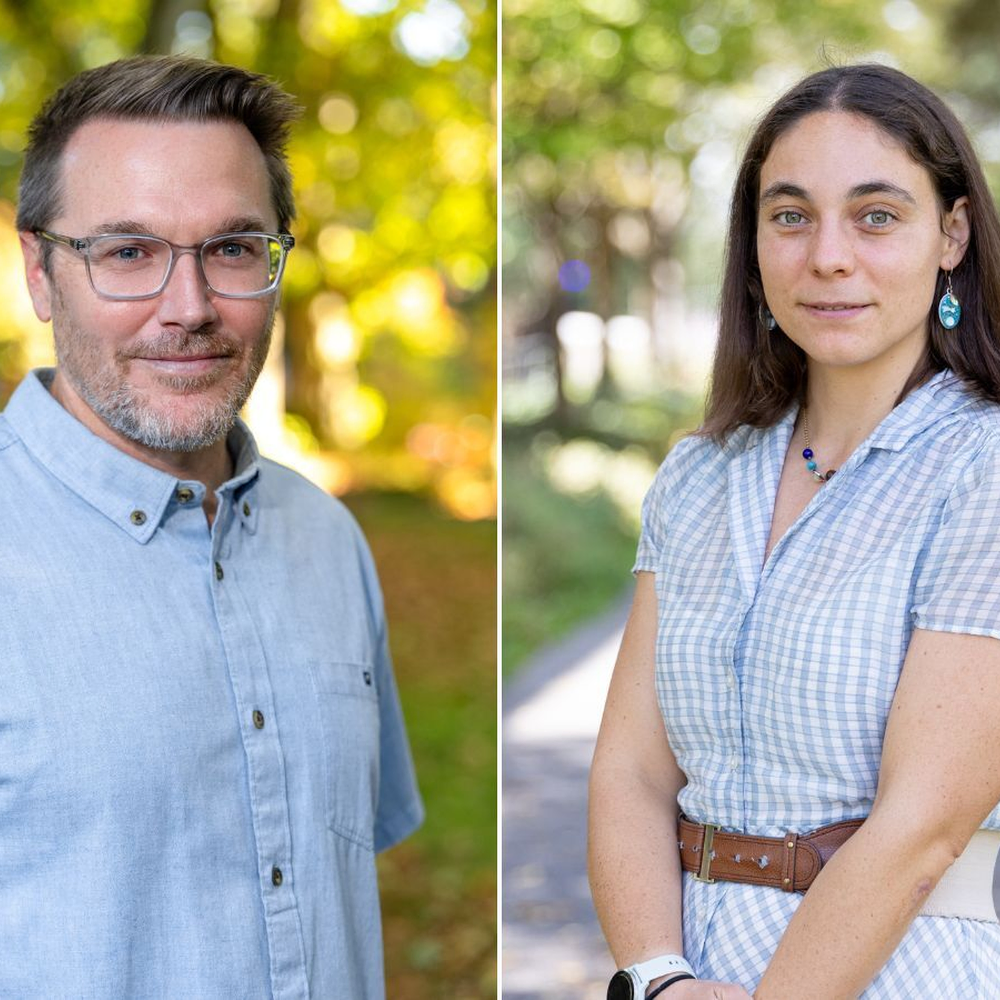
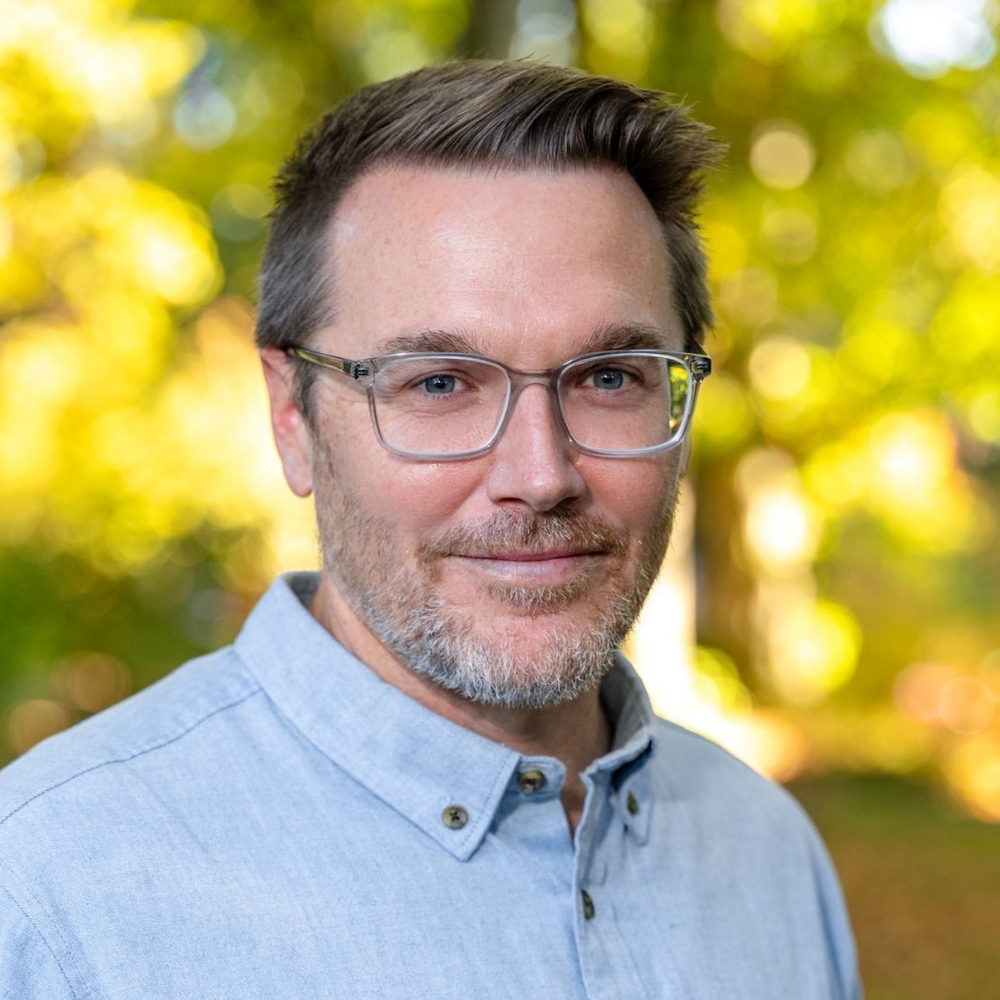


The first time Michael Pitts, Ph.D., watched the now-famous “invisible gorilla” experiment, a video in which a person in a gorilla suit strolls through the middle of a basketball-passing drill, he missed the gorilla entirely. “And then you rewind and you say, how did I not see that?” He says. “It was right in the center of my view.” He was a graduate student at the time, but he’s been studying that exact gap, between what our eyes take in and what we notice, for the better part of two decades.
Pitts is a cognitive neuroscientist and professor of psychology at Reed College, and the 2026 recipient of the Murdock Trust’s Lynwood W. Swanson Scientific Research Award, recognizing distinguished researchers whose work and mentorship reflect outstanding scientific achievement.
From Color Vision to Consciousness Research #
Pitts didn’t set out to study the brain. He started college in chemical engineering, found his way into psychology, and spent his early years studying color vision and psychophysics. The shift towards consciousness research came from two specific moments: the gorilla video, and an experiment he ran as a grad student almost on a dare. A published paper claimed that researchers could detect, using nothing more than scalp electrodes, the exact moment someone’s perception of an ambiguous image changes from confusion to clarity. “I didn’t believe it,” he said, so he tried to replicate the experiment himself. It worked. “After that, I was hooked.”
That started a career built around a central question: what is the basis between brain activity and conscious experience? “I tell my students this is possibly one of the last great remaining mysteries in science,” Pitts said. “It’s sort of like Galileo and Copernicus figuring out the earth is not the center of the universe.”
When asked for real-world applications of his research, Pitts points to potential uses in diagnosing disorders of consciousness in coma and vegetative-state patients, and to the ethical questions this research raises about awareness in animals and even AI. But he gently rejects the premise of the question, wary of the idea that his research needs to justify itself with practical application.
"What I'm really after is trying to understand the neural basis of consciousness, because I think it's a really interesting part of nature," Pitts said. "If we can figure it out, it might shift the way that we view ourselves, as humans, as part of the natural world."
Testing Competing Theories of Consciousness: Pitts and the Cogitate Consortium #
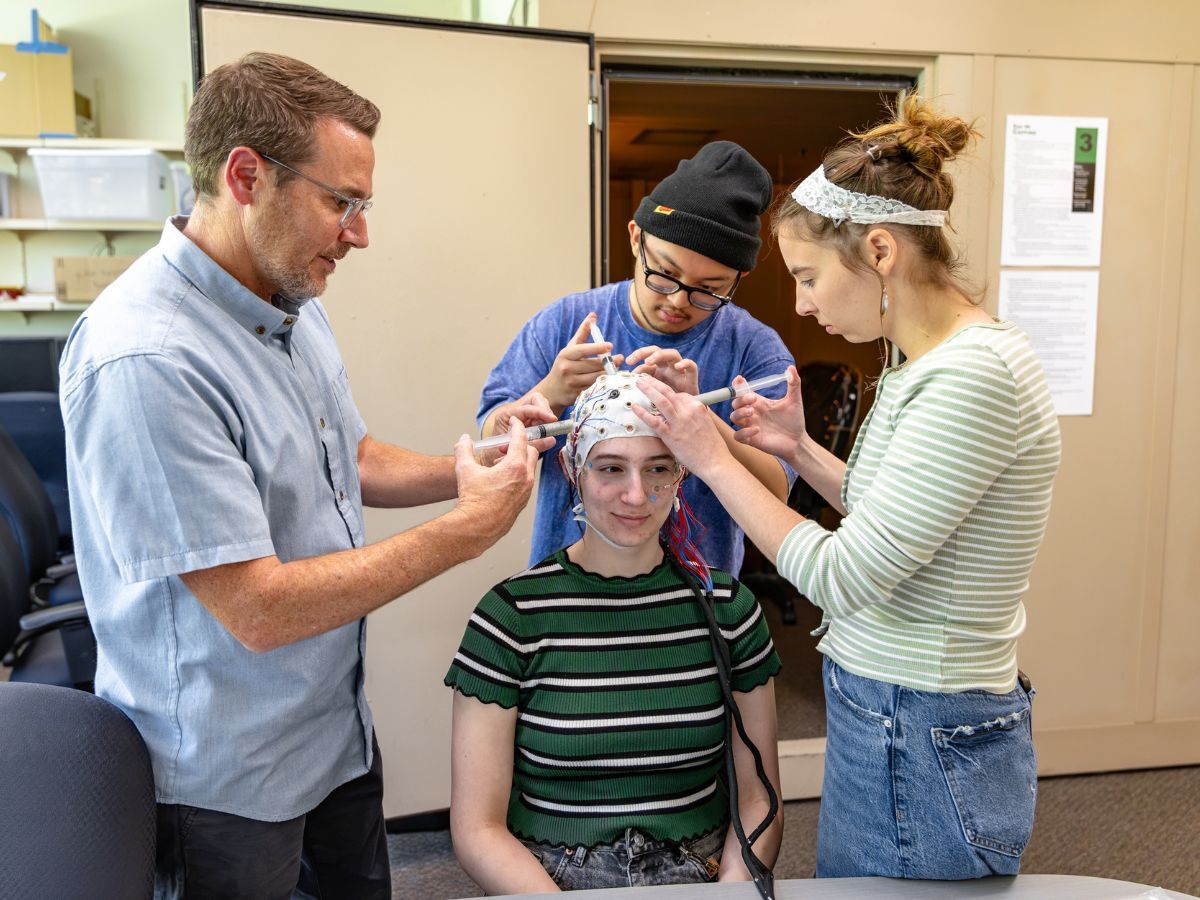
This drive paired with his love of the field has produced an unusually prolific research record. As co-senior author on a 2025 paper in Nature, Pitts helped organize and lead the first major experimental report from the international Cogitate consortium. This consortium brings together competing theories of consciousness across more than 30 co-authors and six laboratories. Kathryn Oleson, Dean of the Faculty at Reed College, credits Pitts with a central role in designing the experiments, coordinating research activity across sites, and helping managing communication between researchers who, by design, disagreed with one another.
For Oleson, Pitts’ willingness to build an experiment capable of proving himself wrong is what makes him stand out. “He really encapsulates what we try to model for our students,” she said. “A scientist should be someone who is skeptical of their ideas and really, truly tries to find out if they’re right or wrong, and puts them to the test.” She points to a moment in one of his classes when a new dataset came back and Pitts examined the results alongside his students before he’d had a chance to look himself. “He hadn’t yet seen what the findings were,” she said. “Students see how excited he is about testing the ideas. It’s not about a certain outcome.”
How Students Shape Pitts' Neuroscience Research #
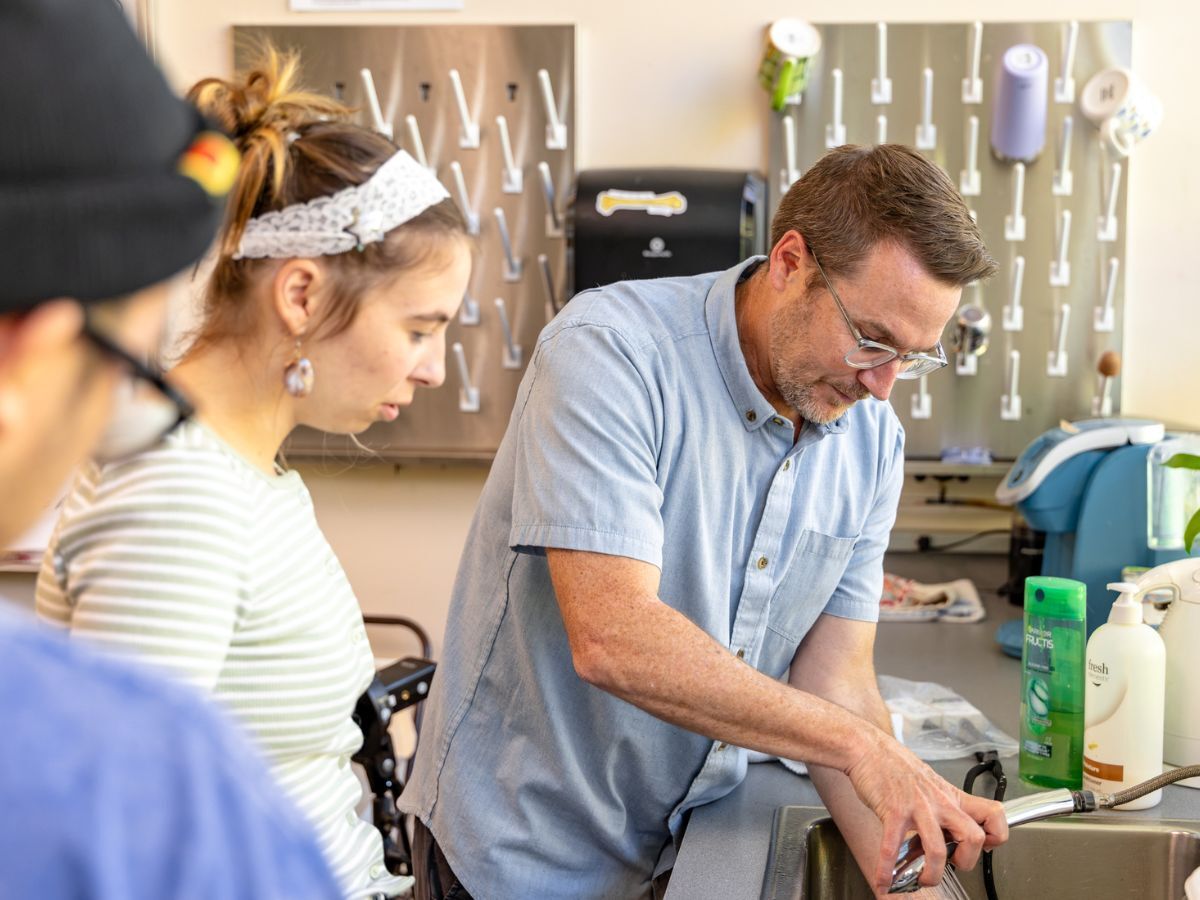
Pitts describes teaching and research as inseparable. “They’re both sort of tied together,” he says. Years of teaching a course on the neuroscience of consciousness pushed him to dig into theoretical literature he hadn’t previously studied closely, work that eventually led him to the Cogitate project. He builds that same real-time uncertainty into his lab, intentionally choosing experiments with partly unknown outcomes so his students experience true discovery alongside him. “We look at the data together for the first time, and they get that excitement from it,” he said.
He also credits his students with pushing his own research in new directions, pointing to a sensory substitution project on “hearing shapes” that originated with an undergraduate’s idea. “That was an example of something I wouldn’t have done without students pushing me in that direction,” he said. Another time, a former student asked whether his inattentional-blindness method could be extended to face perception. Pitts wasn’t sure it would work, but the resulting study he conducted because of her question became one of his most highly cited papers.
What Students Learned in Pitts' Lab #
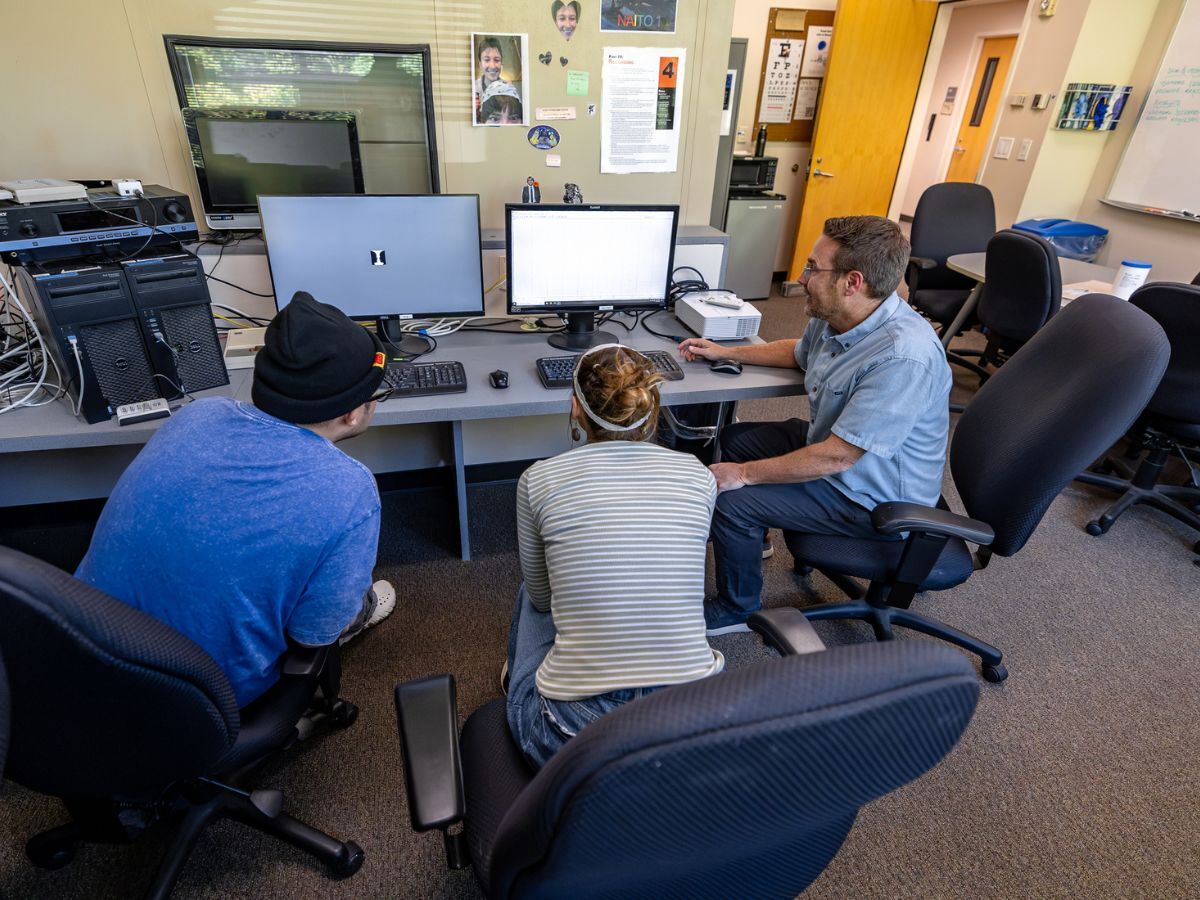
Angelica Nicolacoudis, a former student now pursuing a Ph.D. in cognitive neuroscience, said that Pitts' openness started even before she’d taken a class with him. “He was very, very encouraging of first-year students and underclassmen to just show up to lab meetings. He was very welcoming,” she said. Years later, after a minor data-collection mistake in her own research left her anxious about disappointing him, she remembers his response clearly. “He was just like, thanks for letting me know. Stuff happens. This is how research goes,” she said. “That helped me break out of a perfectionist mindset.”
Christian Graulty, who worked with Pitts throughout his undergraduate years and is now an emergency medicine physician at OHSU, didn’t go into neuroscience, but he says the habits he learned in Pitts’ lab show up daily in his work. “He’s very good at pulling back and thinking about the bigger picture,” Graulty said, describing Pitts’ insistence on building an argument step by step. “I remember sitting at the whiteboard with Michael, thinking: how are we going to design this experiment to answer this question? It’s the same type of thinking I used every day at work.”
This inquisitive mindset is what Pitts hopes his students carry on from his lab, whether or not they end up in his field. "A lot of them are already there, but I hope they carry on a lifetime love of learning,” he says, “and always wanting to ask questions and be curious and answer those questions with experiments and evidence.”
What’s Next, for Reed College and for Pitts #
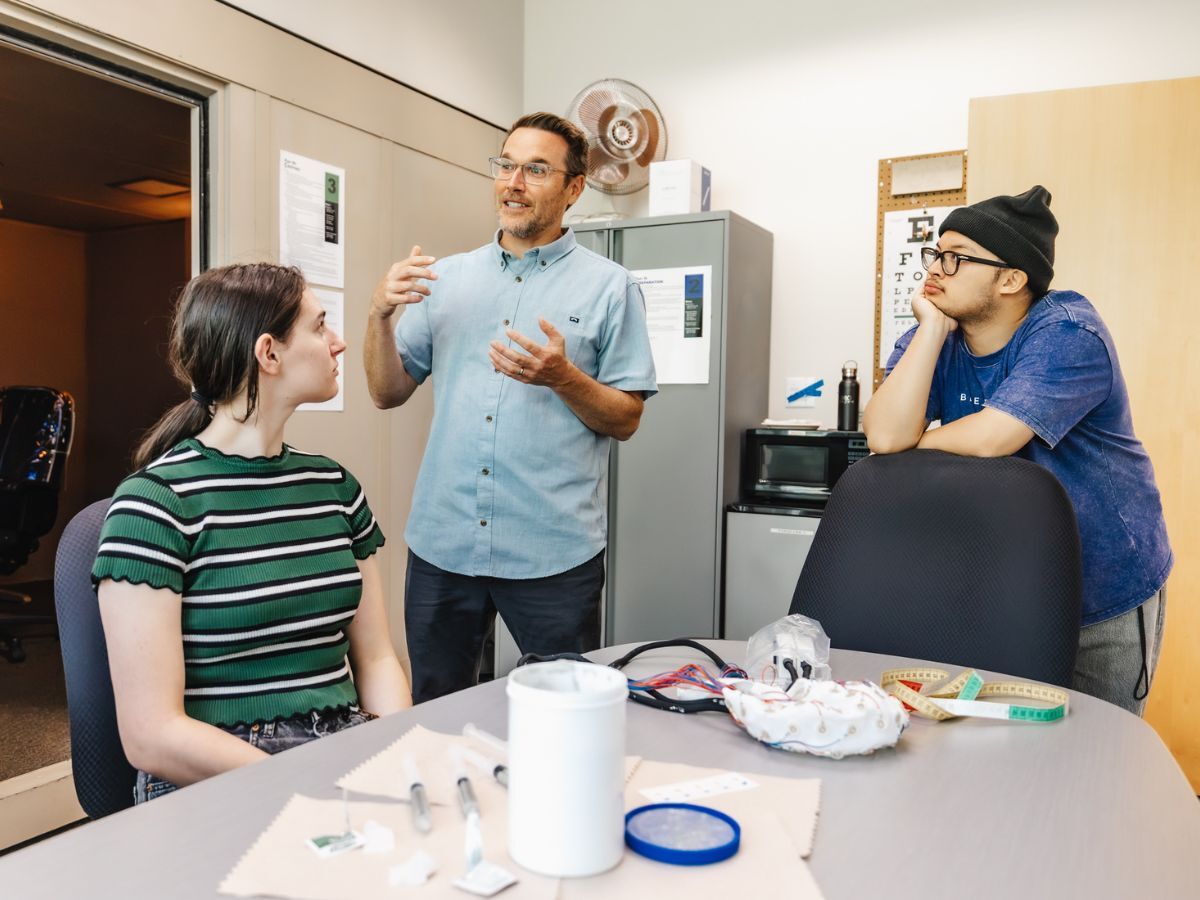
Pitts is excited about the direction of his research. “We think we just discovered a new way to hide stimuli from awareness. So that’s what we’re going to work on the next few years.” Using the award funds, he plans to hire some students to do this research over the summer.
These days, Pitts still shows a version of the gorilla experiment in his intro psychology class, an updated one that uses the gorilla as a decoy among several other visual changes. Twenty years after he first missed the gorilla himself, he's still watching new students do the same thing.
Incorporating his own leading-edge research into an intro course is what an award like the Swanson Scientific Research Award should recognize, says Aaron Putzke, Ph.D., Vice President of Scientific Research at the Murdock Trust. “Research like Michael’s is a reminder that some of the field’s most important work is happening at small, undergraduate-focused institutions, led by faculty who treat mentorship as part of the discovery process, not separate from it. That’s exactly who this award exists to honor.”
And that’s the type of faculty Reed seeks to cultivate, says Oleson. "Our number one mission is to have excellent teachers, but we also want faculty that are making a huge difference in their research fields," she said. "People might not always realize that at small places, you can actually do this big research... and that people who are leading researchers love to work with students and teach them how to do research."
The Murdock Trust is thrilled to present Pitts with the Lynwood W. Swanson Scientific Research Award, and to see the ways he continues to advance research on the neuroscience of consciousness and equip students with lifelong skills at the same time.