









For many students, STEM can feel abstract, distant, and not meant for them. LeMay – America's Car Museum in Tacoma, WA, is working to change that, using one of the most universally familiar objects in American life as a way in: the car.
An Unlikely Classroom #
“We believe the automobile is one of the most relatable and inspiring entry points into STEM learning,” says Jake Welk, Marketing & Communications Director. “Through our educational programming, we meet students where they are, using something familiar and exciting to introduce deeper concepts in engineering, design, physics, and technology.”
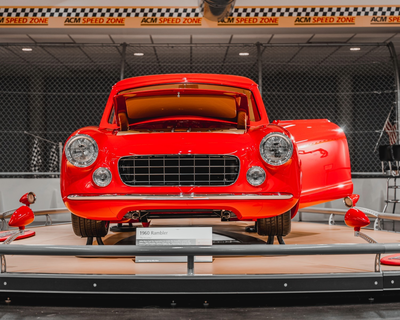
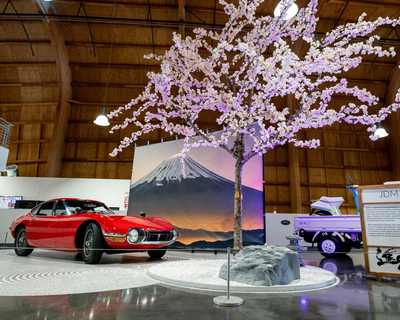
The automobile is not an obvious teaching tool. But LeMay has built its educational programming around the insight that students who might tune out a physics lecture will listen up when the same principles are explained through the curve of a racecar's body or the mechanics of an engine they can touch. The museum's collection spans more than a century of automotive history, giving educators a physical timeline of engineering, design, and technological change that is difficult to capture in a textbook.
The difference between a museum and a classroom, in LeMay's view, is what the setting makes possible. Without the constraints of a standard curriculum or classroom, students are free to explore at their own pace, ask questions that aren't on any worksheet, and engage with ideas through direct observation and hands-on interaction. That freedom, the museum has found, produces learning that is more likely to stick.
LeMay intentionally designs its programs to lower barriers to that experience. Subsidized field trips, community partnerships, and hands-on programming that require no prior knowledge or resources are all part of how the museum reaches students who might not otherwise walk through its doors. The goal is an environment where curiosity is encouraged and participation feels attainable, regardless of background.
Funding Enhancements that Unlock New Learning #
The Murdock Trust is honored to fund direct enhancements to LeMay's hands-on STEM learning environments, including upgrades to interactive exhibits, learning tools, and interpretive elements designed to make complex concepts accessible to a wider range of visitors.
What do these enhancements unlock? The practical effect for students is a shift from observation to participation. “[It] transforms learning from passive to active,” says Welk. Rather than moving past a display, students can engage directly with the principles behind what they're seeing: experimenting with design, testing cause-and-effect relationships in engineering systems, and interacting with technology that mirrors real-world applications. The grant’s investment will strengthen not just individual exhibits but the underlying infrastructure that supports all of the museum's educational programming, increasing its capacity to serve more students and accommodate more diverse learning styles.
The impact of that kind of environment shows up in specific moments that feel small but are often the beginning of a journey. During a recent school visit, a quiet student who had seemed disengaged became absorbed in one of the museum's hands-on exhibits, working through questions about how an engine functions, why certain materials are used, and what it takes to design a vehicle. By the end of the visit, the student was talking about wanting to build something like it someday.
“These moments happen every day at the Museum,” says Welk. It is these moments – the starts of dreams and the sparks of inspiration – that make the museum a living classroom.
The Road to STEM Careers #
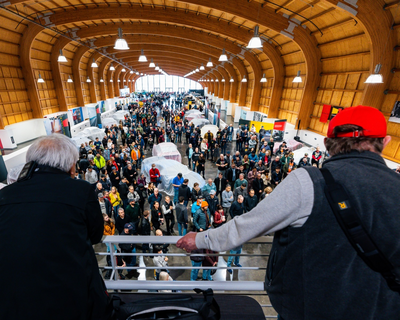
LeMay's vision for the coming years centers on deepening the connection between STEM learning and tangible career pathways, linking students not just to concepts but to real futures in automotive and related industries. That includes growing educational programming, expanding partnerships, and continuing to invest in immersive experiences that resonate with younger visitors. In this work, accessibility remains a central priority. The museum is focused on ensuring that more students, regardless of background or resources, have the opportunity to engage with its programs.
The students who visit LeMay are not all going to become engineers or automotive designers. But the museum's premise is that exposure matters, that a single visit can reframe what feels possible, and that an object as familiar as a car can be the thing that makes a student start asking questions they won't stop asking.
Thank you, LeMay, for creating spaces for students and visitors of all kinds to connect to STEM learning and dream of bright futures down the road.